
मंग्सिर ३, २०८३ बिहिबार
November 19, 2026
 युग खबर
२०८३ मंग्सिर ३, बिहिबार
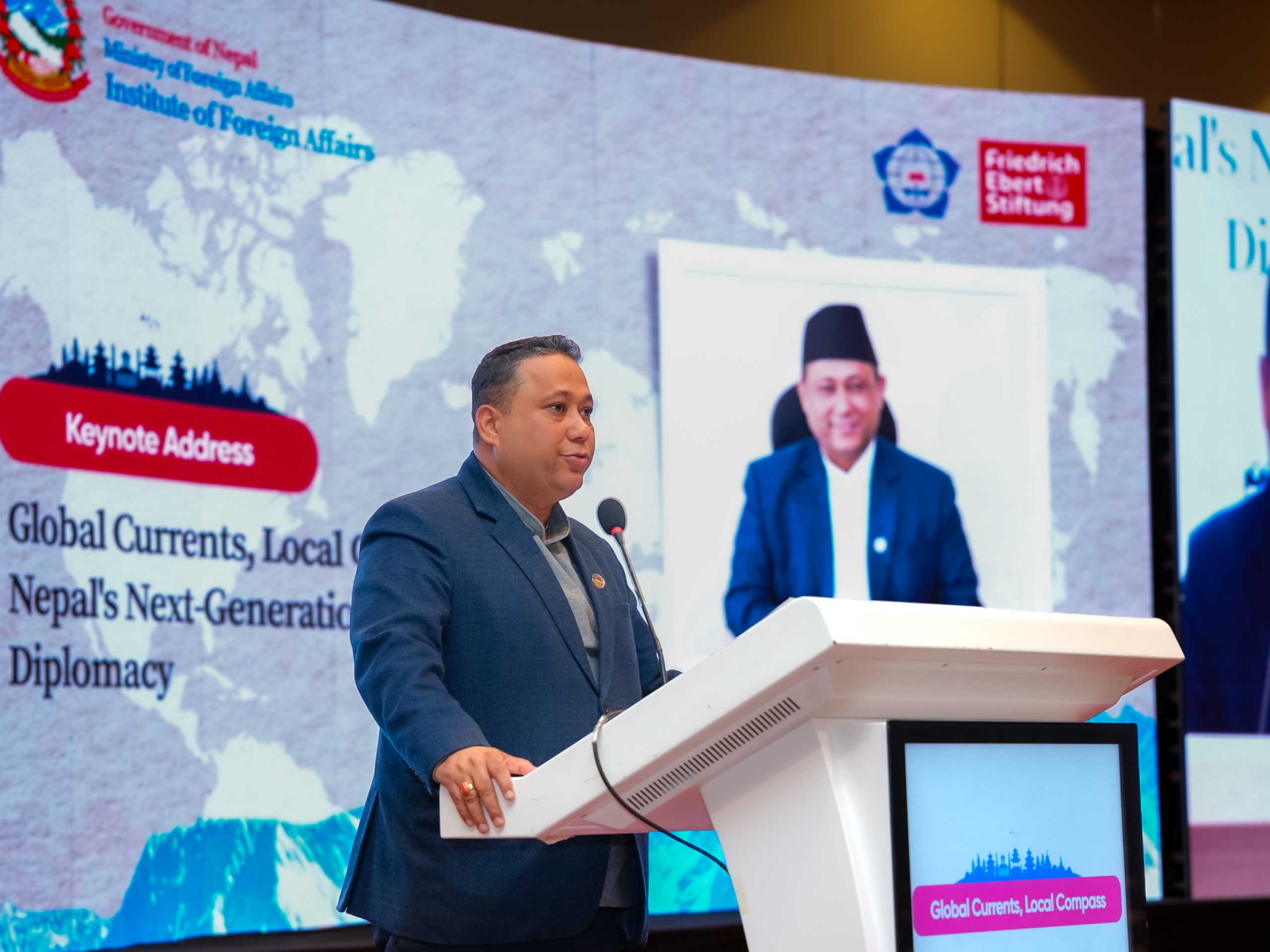
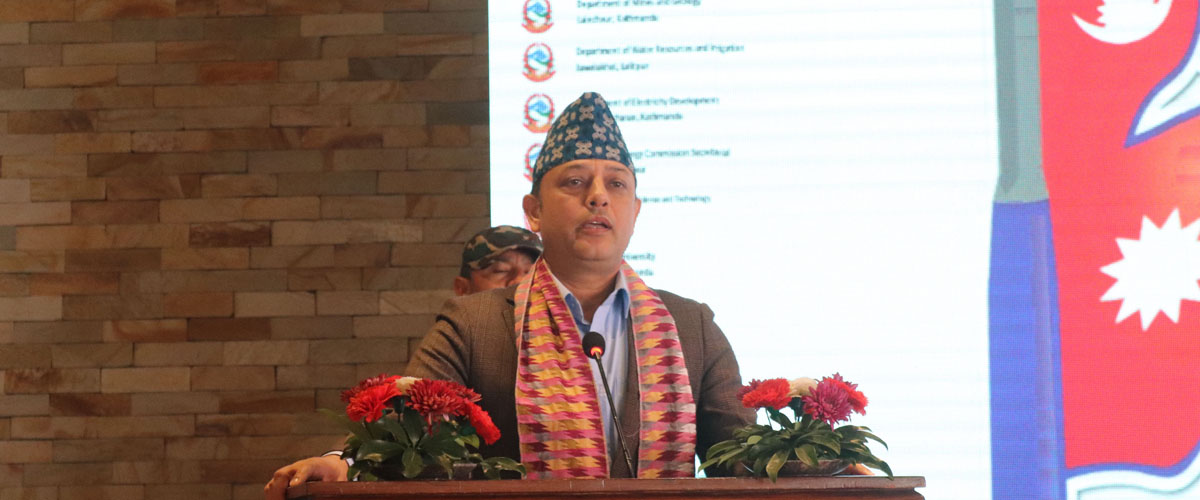
Kathmandu, Nov 19 : Minister for Foreign Affairs Shisir Khanal has said that in order to protect Nepal’s national interests and effectively represent the country internationally in a changing world, the new generation of diplomats needs to develop critical thinking, adaptability, collaboration, and a consistent learning ability.
Addressing at the opening ceremony of the seminar on ‘Global Trends, Local Directions: Diplomacy for Nepal’s Future Generation’ organized today here by the Institute of Foreign Affairs (IFA), he mentioned that the start of effective diplomacy comes from deeply understanding one’s country, society, culture, strengths, and limitations.

Foreign Minister Khanal said, “You can’t effectively represent your country to the world without properly understanding yourself, your community, and your country.”
Pointing out that Nepal has been a meeting place of ancient civilizations, he emphasized the need to confidently present Nepal’s cultural, natural, and philosophical identity in the international forums.
He said that critical thinking for analyzing evidence and solving problems, the ability to adapt quickly to crises, empathy to understand the concerns of different cultures and communities, the ability to collaborate across various sectors and institutions, and lifelong self-learning are all necessary for diplomacy.
Minister Khanal pointed out that in a rapidly changing world, individuals and organizations that cannot acquire new knowledge and skills will fall behind, and he urged young diplomats to gain proficiency in world languages like English, Chinese, and Arabic as well as in new subjects and fields.
Referring to the message from the Bhagavad Gita, ‘You have the right to perform your duties, but not to the fruits of your actions,’ Foreign Affairs Minister Khanal said that we must carry out our responsibilities in diplomacy and nation-building honestly.
He urged young diplomats, researchers, and professionals to actively contribute as an integral part of Nepal’s diplomatic community, even while working in various fields of government, research, and advocacy.
Similarly, IFA Executive Director Rojina Tamrakar has underlined that technology in international relations, climate change, economic inter-dependency, immigration, energy transformation and changing geo-political equation have created new challenges and opportunities.
Tamrakar pointed out the need of enhancing the capacity of young diplomats, researchers and policymakers to align them with priorities of Nepal’s national interest and foreign policy considering the global change on time.
The role of individuals, institutions, mechanisms and non-state actors is also becoming significant in diplomacy as diplomacy is no longer confined solely to state and traditional diplomacy, she viewed.
Group-wise discussion would be held on thematic session on technology, digital transformation, future of diplomacy, climate, energy, and Nepal’s place in changing world order, immigration and Nepal’s global participation in the seminar.
The Institute shared that the event was organised with the goal of exchanging views among university students, young diplomats, government employees, researchers and young professionals as well as opportunity for policy dialogue.
Election Commissioner Rajiv Subba, senior officer of the Ministry of Foreign Affairs, representatives of diplomatic missions, researchers, academicians, and young professional were present in the event.(RSS)
युगखबर अनलाइनमा प्रकाशित कुनै सामग्रीबारे कुनै गुनासो, सूचना तथा सुझाव भए हामीलाई [email protected] मा पठाउनु होला । धन्यवाद ।









प्रतिक्रिया